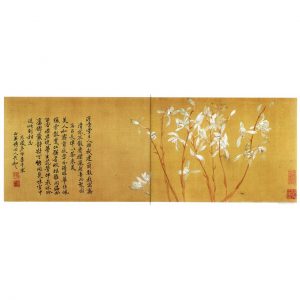
 Is there a classic, “standard” way to do a calligraphy piece that uses either a whole poem or a few line(s) of a poem?
Some poems are so famous that I suppose a line or two quoted need not even be cited on the piece. Much of the calligraphy I’ve seen from history uses one of the two general following formats:
- The title and author name of the poetry is the first vertical line on the right, followed going to left the poem (or quoted lines) themselves, then the calligrapher’s name and seal in the last vertical line.
- The poem or lines from the poem are arranged vertically, right to left, then the author of the poem is shown, and below that is the calligrapher’s name, seal and sometimes date.
Does anyone know of a generally accepted format for doing this kind of quote in calligraphy? I know that if I’m doing this for myself it could be a lot of different ways, but I like tradition. : )
Thanks for any advice or if there is information elsewhere online/internet.
Craig #Poetry
Visit the forum at https://ift.tt/2Yiw079 to join the discussion on Inkston Oriental Art Community Inkston Oriental Art Community » All Posts https://ift.tt/2xAnuUo
 Beautiful work, here and on your website. Thank you for the guidance.
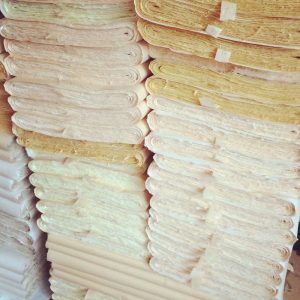 Hi all, im looking to get some unsized xuan paper with the drying grid marks/ lattice shape being highly visible. It’s an aesthetic choice for Sumi paper I really like and have run out of sadly. Could Inkston or fellow customers/painters point me in the right direction? I’m also a fan of the half cut paper size, approx 136cm x 35cm. Many thanks, and happy new year!


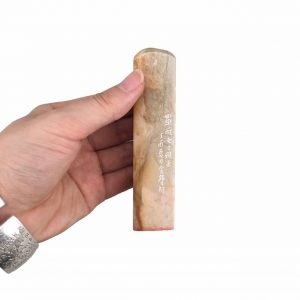 Hello, I am looking to get a square or rectangular seal made with my Chinese zodiac, Metal Horse. I am interested in having it done as Tetsu Uma, “Iron Horse”, in kanji, as 鉄馬. Using Google translate app, I find that the same characters mean “Zhí mǎ” in Chinese, but the english meaning remains the same. Is this correct? Would the seal carvers at Inkston be able to accommodate such a request?
 You are right on mirroring the characters when you put them on your stone, so when you stamp your seal it will look right. You can use a pencil or a felt pen to draw the characters on it (traditionally they use ink and brush).
 Hi Catherine,
 For Chinese brushes, once used you should not put the cap back on. The plastic cap is only there when you buy it to protect the brush. After using it, its indeed better to hang the brush (the water wont drip out if you gently wipe it with the towel).
 Fave Japanese brush pens to draw cartoons, sketch/doodle & do caligraphy / practice writing in Arabic (beginner student)!
 The general rules of thumb are as follows: