
Monday, April 20, 2020
Reply To: How would i paint my name in Chinese grass style calligraphy.

Reply To: Can brushes be stored long term in a roll?

Reply To: Reason behind owning a lot of seals

Reply To: brush for cursive script, semi-cursive script

Reply To: ”Slender Gold” (瘦金体) style brush?

http://calligraphie-peinture-chinoise.com
Or see one example of my calligraphy here:

Thursday, March 26, 2020
”Slender Gold” (瘦金体) style brush?
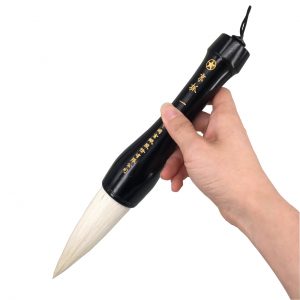 I’ve discovered ”Slender Gold” (瘦金体) style of calligraphy and want to ask which brush hair/combinations would you recommend? I suspect a sharp point weasel style would do it, but I’d like to ask if that would seem good to try.
Sunday, March 8, 2020
Reply To: Mounting paste

I do all my own backing/mounting including very large works. I also teach simple mounting on wood and canvas with much success.
There are a number of ways depending on who is your teacher or what book/video you consult. Henry Li’s are good so you can’t go wrong there.
For small pieces (8×10 and smaller) I use Nori paste or make my own with cornstarch. For very large pieces which require an initial backing, I make a flour-based paste. If you have used good quality ink (preferably ink stick) and Chinese or Japanese colours (tube, pan or granules), you should not have to worry about the water damaging the painting. These substances are made with a glue that renders the ink and colours permanent when dry. However, if you like to use watercolours made in the Western tradition, you can spray them with a fixative made for watercolour artists. Be aware though that this fixative can sometimes discolour the delicate washi (rice papers) so use with a light hand and caution. Test it first always on practice pieces.
Below, I have attached some recipes (home-made pastes) and a mounting method for you to try. My advice is – just try it! The alum water approach is also good by the way. PS RE: rather than glass, use plexiglass. Safer.
Best of luck to you! Sincerely, Heather
[Disclaimer: This method was passed along to me by a fellow artist. I have rewritten them and changed a few things based on my own experience. Some knowledge and experience regarding the treatment and handling of paintings on rice paper is assumed, and as such, I take no responsibility for any errors or problems with artwork that may occur during or after using this method. Good luck!]
How to mount onto a Wood (Box) Frame
Materials & Tools:
Wood frame – usually made from birch, and either regular depth or gallery depth
Rice paper a little larger than wood frame
**Acrylic medium of your choice
Your painting – preferably with the paper slightly larger than the finished piece will be
Acid-free paste (see recipes)
2” to 3” clean hake brush for paste – reserve for paste only!
2” to 3” clean hake brush for use with acrylic medium – reserve for medium only!
Spray bottle filled with water – for fine mist
Method:
Ensure wood frame surface is clean and dry
Lay your painting on the wood frame where you would like it to sit and gently fold down edges to make a slight impression
Paint a thin layer of acrylic medium on frame to alkalize the surface & let dry
Spray mist a piece of plain rice paper to relax paper
Spread acid-free paste on surface of wood frame and use wax paper to smooth it starting from center outwards, then along edges, etc. Remove air bubbles and wrinkles gently. Cover with a piece of wax paper and let dry under some weight
Mist your painting to relax the paper, keep track of where you wanted it to sit on the wood frame (fold lines)
Spread paste on surface of wood frame and smooth painting on it to remove air bubbles and wrinkles without being too rough or the paper will pill – let dry
Optional: spread a thin layer of clear acrylic medium, preferably one that has UV protection, over the finished mounted painting
The finished work can be framed in a float frame or left unframed. Some ideas for finishing without additional framing include painting the sides with acrylic paint (black, white, etc.) or covering the sides with matching paper using the same glue process. Don’t forget to put your name, date and title of work on the inside back! Best to write these details on a piece of paper and glue it on the inside.
Use appropriate hanging hardware such as sawtooth hangers for small pieces, or traditional wire with eye hooks for larger works. There are quite a few options to hang artwork.
**Various brands such as Golden, TriArt, Liquitex, etc. matte or semi-gloss acrylic medium
TIP: Use a permanent marker to write on your mounting brushes: PASTE ONLY, MEDIUM ONLY. Wash them well with warm water and soap. Keep them clean (away from paint, ink, etc.)
PASTE RECIPES
Ottawa School of Art 2020
Heather MacDonald, Instructor
Commercial Paste
Nori (Yasutomo brand) is a starch paste that is great for mounting smaller works. One jar lasts a long time!
Home-made Pastes
1. Wheat paste – made with pastry flour (low gluten)
2. Starch paste – made with cornstarch or rice flour (similar to Nori Paste)
These pastes are generally reversible (they can be undone with water) unlike white glue.
Wheat Paste
Traditional paste which can be made on the stove or in the microwave.
A word about Water:
If you want to be more archival, use distilled water to make your pastes. At the very least, I use filtered tap water from the fridge.
Microwave Method
¼ cup pastry flour
1 cup cold water
Thoroughly mix the flour into ¼ cup cold water. Remove all lumps. Boil the remaining ¾ cup water and then slowly pour the flour into it, whisking/mixing as you do so. It should start to thicken up. Microwave it in 30 second increments until it is thick enough. Store in the fridge in a clean jar or airtight container.
Stove-Top Method
1 part pastry flour*
4 ½ parts cold water
* For example: if you start with ½ cup of flour, then add 2 ¼ cups cold water. This makes quite a bit of paste. You may want to start with half this amount.
Combine flour and water with a whisk. Stir out all lumps. Place over low to medium heat. Stir nearly constantly until first bubbles appear as it approaches the boil. If you don’t watch and stir, the mixture will stick to the pot and scorch. Stir 30 seconds longer. Remove from heat immediately or you will end up with a mixture resembling rubber. Let cool, and paste away. It can be thinned with water if need be. Store in a clean air-tight container in the fridge. Keep it until it starts to smell bad.
————————————————————————
Starch Paste
Cornstarch or rice flour, when mixed with water and cooked, makes a smooth shiny paste that is strong when dry.
Microwave Method
Mix ¼ cup cornstarch or rice flour with enough cold water to make a smooth thick paste.
Stir in a cup of cold water and place in microwave for about 1 minute on HIGH power. Take it out and stir. As it thickens, be careful not to let it get rubbery. Check it after each 30 second increment. It is better to take it out and check it after each increment.. You want to have an almost pudding-like thickness – the paste will take on a translucent, slightly shiny look. Let it cool a bit – it usually thickens up even more as it cools off.
Strain out any lumps by pushing the paste through a sieve with a wooden spoon . Store the paste in a clean airtight container in the refrigerator when you’re finished. It can keep for a while, until it starts to smell bad.
Use the same approach over the stovetop, again watching it so that it does not overboil. Cook on medium-low rather than high heat, stirring constantly. Try not to let it get too thick. If the paste gets VERY thick, it can always be thinned with water. As long as it doesn’t burn, it’s ok. Make sure it is not lumpy! #AlumPaste #GluePaste #Microwave #Mounting #Nori #Paste #WheatPaste
Visit the forum at https://ift.tt/39AFxdB to join the discussion on Inkston Oriental Art Community Inkston Oriental Art Community » All Posts https://ift.tt/3cH0Axe中国加油 for China
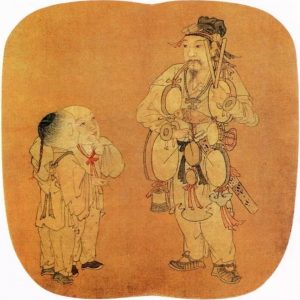 On social media you will have encountered some collages or video clips of people/companies with one message to send out to mainly China who has been fighting against the Corona virus.
中国加油
加油 “jiā yóu”, literally means “add oil” but in a more common translation it means “courage” and this combined with 中国 “zhōngguó “ which means China.
As we are enjoying the art that originated in China, why not show our compassion and sympathy by writing these words in your favourite calligraphy style? Share your calligraphy or painting art on the forum or Facebook page of Inkston to show your sympathy 🙂
#China #Courage #SympathyChina #中国加油
Visit the forum at https://ift.tt/3cIe3oD to join the discussion on Inkston Oriental Art Community Inkston Oriental Art Community » All Posts https://ift.tt/2hIZtF6Sunday, March 1, 2020
Reply To: Huang Binhong (1865–1955)

Reply To: “Dream of the Red Chamber” illustrated

Reply To: Love of Lanterns

Would love to see your lanterns!
Heather #HandPaintedLanterns
Visit the forum at https://ift.tt/2I5cKSy to join the discussion on Inkston Oriental Art Community Inkston Oriental Art Community » All Posts https://ift.tt/2TvwyUaMonday, February 17, 2020
David Reid – Colourful Inspirations in Materials

Have you encountered difficulties when combining Western painting techniques with Chinese ones? I only use water-based inks on Chinese papers. The inks I use are Australian artist quality (and some European as well) water-based. The... #ChinesePainting #ChinesePaintingOnSilk #OilPainting #PaintingOnSilk #WaterColourPainting
Clic David Reid – Colourful Inspirations in Materials para más información Inkston
https://ift.tt/2SV0Bof published first on Inkston
Subscribe to:
Posts (Atom)