This is a guide to the types of stone and how to buy them, for general introduction and workshop pictures see Ink Stone, a work of art used for making art.
Inkstones come in an enormous variety of shapes, sizes and prices, some of the main factors to consider are:
- Shape: varies from round/oval, rectangular/trapezoid, to huge pebble/rock shapes
- Carving: almost anything is possible but typically eg:
- geometric patterns
- flower / branch, Shanshui landscape scene
- special designs like basket-weave, water-buffalo
- Stone type:
- pattern: the stone may have gold speckles or flecks or embedded wave or crazing pattern. Note that whichever the pattern, the inkstone surface is smooth, this is embedded natural patterning.
- source: ancient mine stone is of very limited supply and high cost. Also, different mines produce different pattern stone. 歙砚 Sheyan “She stone” inkstones take their name from SheXian “She County”, in Anhui province, prefecture of ancient Huizhou “Hui city”, the “Hui” part of today’s AnHui province. Cheaper student inkstones may be produced from similar stone but not from these mines.
- Size: note that when the stone type is of limited supply, the larger stones are exponentially more expensive, since it is more difficult to get a complete large stone in the best pattern.
- Packaging:
- small/student inkstones are normally packaged in card box,
- small-medium professional inkstones may be presented in a made-to-measure solid camphorwood box: this is expensive and only included where pictured and indicated.
- large inkstones – let us know if you have any special needs
Since the variety of shapes and decorations are infinite, we can’t list them all so for more information please ask us. Here are just a few examples for inspiration:
In the shop we have some examples with different patterns of stone:
Speckled “Eel Yellow Caviar”(Ji Yuan Mine)
Speckled “Yellow Caviar” hand-carved She Inkstone
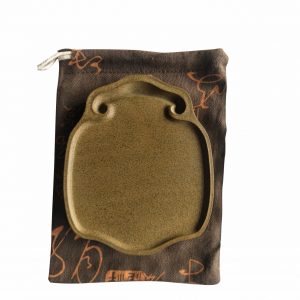 Special feature of the stone: Eel Yellow Caviar She stone from Ji Yuan mine. 济源坑鳝鱼黄鱼子. Ji Yuan mine is one of the four most famous inkstone mines in China.
$450.00$300.00 (USD)$450.00$300.00 (USD)
Brand: inkston
Materials: She Inkstone Speckled “Eel Yellow Caviar” (Ji Yuan Mine)
Recommend to: Advanced Level, Professionals
Suitable for: Calligraphy, Chinese Painting
Product Size: 12.6 x 10.5 x 1.6 cm
Sale!Speckled “Yellow Caviar” hand-carved She Inkstone
$450.00$300.00 (USD)
Add
Speckled “Yellow Caviar” Round hand-carved She Inkstone
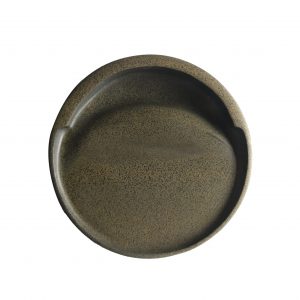 10.2cm/4" diameter round hand carved professional Inkstone Special feature of the stone: Eel Yellow Caviar She stone from Ji Yuan mine. 济源坑鳝鱼黄鱼子. Ji Yuan mine is one of the four most famous inkstone mines in China.
$480.00$310.00 (USD)$480.00$310.00 (USD)
Brand: inkston
Materials: She Inkstone Speckled “Eel Yellow Caviar” (Ji Yuan Mine)
Recommend to: Advanced Level, Professionals
Suitable for: Calligraphy, Chinese Painting
Product Size: 10.2 x 10.2 x 2 cm
Sale!Speckled “Yellow Caviar” Round hand-carved She Inkstone
$480.00$310.00 (USD)
Add
Speckled “Green Caviar” (Ji Yuan Mine)
Green caviar pattern Round hand-carved She inkstone
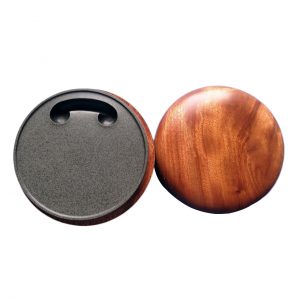 11.5cm/4.5" diameter round hand carved professional Inkstone in hand carved camphorwood box Stone: 歙砚 She inkstone from 济源坑 Ji Yuan mine: one of the four most famous inkstone mines in China Stone pattern: 青鱼子 Green Caviar (natural specked markings) $680.00 (USD)
$680.00 (USD)
Brand: inkston
Materials: She Inkstone Speckled “Green Caviar” (Ji Yuan Mine)
Packaging: Handmade Fine Camphorwood Box
Recommend to: Professionals
Suitable for: Calligraphy, Chinese Painting
Product Size: 11.5 x 11.5 x 3 cmGreen caviar pattern Round hand-carved She inkstone
$680.00 (USD)
Add
Rippling waves pattern (new Mine)
Rippling Wave pattern hand-carved She inkstone
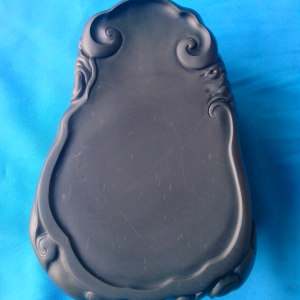 Special Note: These pieces are made to order and take 2 weeks to prepare. The price is according to the type and size/weight of stone, if you have special requirements, please specify and we will make a new quotation for you.$350.00 (USD)
$350.00 (USD)
Brand: inkston
Materials: She Inkstone Rippling waves pattern (new Mine)
Recommend to: Advanced Level, Medium Level, Professionals
Suitable for: Calligraphy, Chinese PaintingRippling Wave pattern hand-carved She inkstone
$350.00 (USD)
Add
Golden shadow (new Mine)
Flowers Golden shadow pattern hand-carved She inkstone
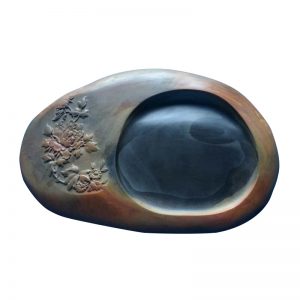 Special feature of the stone: new mine stone with natural golden shadow colouring. Hand carved and detailed with flowers.$580.00 (USD)
$580.00 (USD)
Brand: inkston
Materials: She Inkstone Golden shadow (new Mine)
Recommend to: Advanced Level, Professionals
Suitable for: Calligraphy, Chinese Painting
Product Size: 28 x 17.5 x 3 cmFlowers Golden shadow pattern hand-carved She inkstone
$580.00 (USD)
Add
River scene Golden shadow pattern hand-carved She inkstone
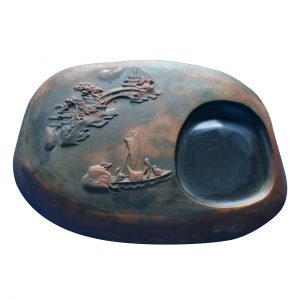 Special feature of the stone: new mine stone with natural golden shadow colours. Hand-carved with scene of boat, bridge, trees.$560.00 (USD)
$560.00 (USD)
Brand: inkston
Materials: She Inkstone Golden shadow (new Mine)
Recommend to: Advanced Level, Professionals
Suitable for: Calligraphy, Chinese Painting
Product Size: 24 x 16 x 5 cmRiver scene Golden shadow pattern hand-carved She inkstone
$560.00 (USD)
Add
River scene2 Golden shadow pattern hand-carved She inkstone
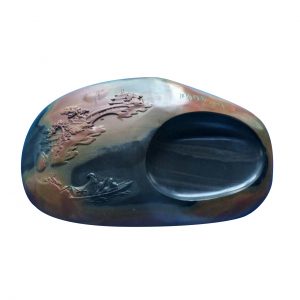 Special feature of the stone: new mine stone with natural golden shadow colours. Hand-carved with scene of boat, bridge, trees.$680.00 (USD)
$680.00 (USD)
Brand: inkston
Materials: She Inkstone Golden shadow (new Mine)
Recommend to: Advanced Level, Professionals
Suitable for: Calligraphy, Chinese Painting
Product Size: 26 x 15 x 5 cmRiver scene2 Golden shadow pattern hand-carved She inkstone
$680.00 (USD)
Add
Crazed vein pattern (Ancient Mine)
Ancient mine crazed-vein pattern hand-carved She inkstone
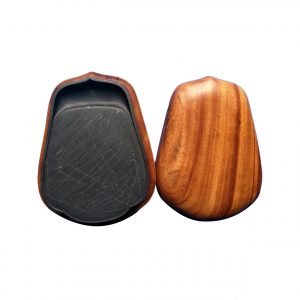 Special feature of the stone: precious ancient mine high grade She inkstone. The stone itself has natural vein pattern.$1.100.00 (USD)
$1.100.00 (USD)
Brand: inkston
Materials: She Inkstone Crazed vein pattern (Ancient Mine)
Packaging: Handmade Fine Camphorwood Box
Recommend to: Professionals
Suitable for: Calligraphy, Chinese Painting
Product Size: 13.5 x 9.6 x 2 cmAncient mine crazed-vein pattern hand-carved She inkstone
$1.100.00 (USD)
Add
Gold fleck pattern (new Mine)
Gold fleck pattern hand-carved She inkstone
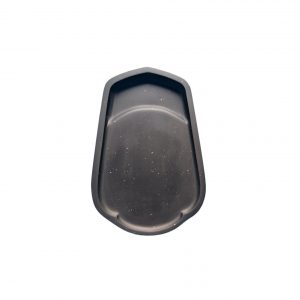 Special feature of the stone: new mine stone with natural "gold" flecks 金星. The flecks are not gold, instead it is brownish flecks on the natural stone. Extra customization service: for carving poems/ signatures in Chinese, please contact inkston. The extra service fee is normally 50 USD.
$400.00$330.00 (USD)$400.00$330.00 (USD)
Brand: inkston
Materials: She Inkstone Gold fleck pattern (new Mine)
Recommend to: Advanced Level, Professionals
Suitable for: Calligraphy, Chinese Painting
Product Size: 12.8 x 8.5 x 2.8 cm
Sale!Gold fleck pattern hand-carved She inkstone
$400.00$330.00 (USD)
Add
Smooth vein pattern (new Mine)
Floral decoration Smooth vein hand-carved She inkstone
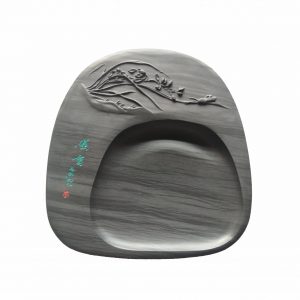 $130.00 (USD)
$130.00 (USD)
Brand: inkston
Materials: She Inkstone smooth vein pattern (new mine)
Packaging: Wood Box
Recommend to: Advanced Level, Beginners, Medium Level, Professionals
Suitable for: Calligraphy, Chinese Painting
Product Size: 14.6 x 14.2 x 3 cmFloral decoration Smooth vein hand-carved She inkstone
$130.00 (USD)
Add
Smooth vein hand-carved She inkstone in fitted wooden box
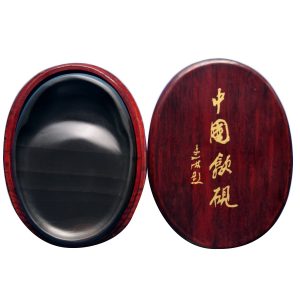 Special feature of the stone: new mine She inkstone with natural veins.$130.00 (USD)
$130.00 (USD)
Brand: inkston
Materials: She Inkstone smooth vein pattern (new mine)
Packaging: Wood Box
Recommend to: Advanced Level, Beginners, Medium Level, Professionals
Suitable for: Calligraphy, Chinese Painting
Product Size: 12.8 x 9 x 2.6 cmSmooth vein hand-carved She inkstone in fitted wooden box
$130.00 (USD)
Add
Ready-made and entry level inkstones
INKSTON Rectangular Inkstone without Cover
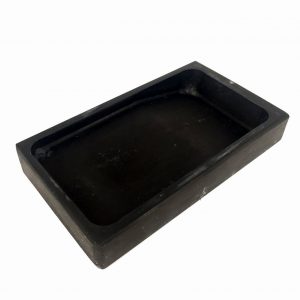 Rectangular inkstone made with natural stone, available in a range of sizes: 8" - 8 inch diameter (20 * 13.5 * 2.8 cm), 1330g 7" - 7 inch diameter (18 * 12 * 2.5 cm), 1250g 6" - 6 inch diameter (15 * 8.5 * 2.5 cm), 550g 5" - 5 inch diameter (13 * 7.5 * 2 cm), 392g$14.70 – $22.15 (USD)
$14.70 – $22.15 (USD)
Brand: inkston
Packaging: Blue card boxINKSTON Rectangular Inkstone without Cover
$14.70 – $22.15 (USD)
Choose
INKSTON Special Designed 5 inches Round Inkstone With Cover
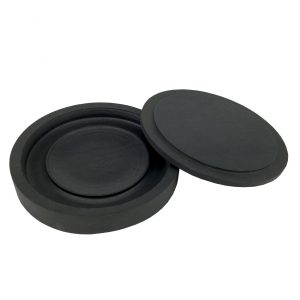 Hand crafted with natural stone. It has special design on the bottom and it forms a special ink tank inside the inkstone.$18.60 (USD)
$18.60 (USD)
Brand: inkston
Packaging: Blue card box
Product Size: 12 x 12 x 2.3 cm
Product Weight: 576
Shipping size: 13 x 13 x 3 cmINKSTON Special Designed 5 inches Round Inkstone With Cover
$18.60 (USD)
Add
Old Hu Kai Wen Handmade SheYan Inkstone
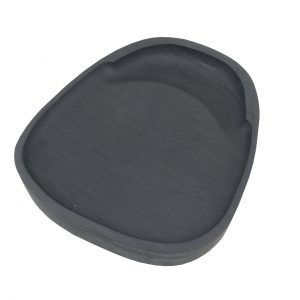 Net Weight: 1.5 Kg * approx. Size: 20 * 16 * 2.7 cm Material: She Ink Stone Packaging: Blue Silk Lined Box Handcrafted by Old Hu Kai Wen Special Features: this inkstone is selected and handcrafted by Old Hu Kai Wen factory. The stone is made with fine authentic she inkstone. The stone surface is very smooth and very good…$59.00 (USD)
$59.00 (USD)
Brand: inkston
Materials: She inkstone
Packaging: Blue silk-lined card box
Product Weight: 1500
Shipping size: 25 x 19 x 5 cmOld Hu Kai Wen Handmade SheYan Inkstone
$59.00 (USD)
Add
Old Hu Kai Wen Round Inkstone with Cover
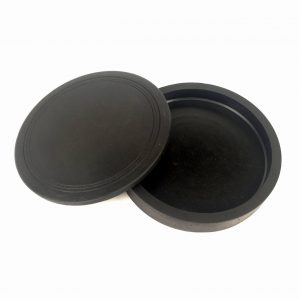 Round shape inkstone made with natural stone with a specially made stone cover, available in a range of sizes: 8" - 8 inch diameter (20.5 * 20.5 * 3.8 cm), 1930g 7" - 7 inch diameter (17.5 * 17.5 * 3.5 cm) , 1510g 6" - 6 inch diameter (15.2 * 15.2 * 2.8 cm), 1040g 5" - 5 inch diameter (12 *…$14.70 – $26.11 (USD)
$14.70 – $26.11 (USD)
Brand: inkston
Packaging: Blue card boxOld Hu Kai Wen Round Inkstone with Cover
$14.70 – $26.11 (USD)
Choose
Smooth vein hand-carved She inkstone in fitted wooden box
Special feature of the stone: new mine She inkstone with natural veins.$130.00 (USD)
$130.00 (USD)
Brand: inkston
Materials: She Inkstone smooth vein pattern (new mine)
Packaging: Wood Box
Recommend to: Advanced Level, Beginners, Medium Level, Professionals
Suitable for: Calligraphy, Chinese Painting
Product Size: 12.8 x 9 x 2.6 cmSmooth vein hand-carved She inkstone in fitted wooden box
$130.00 (USD)
Add
Read more about Inkstones
We also had a good book recommendation for those wanting to learn more: The Social Life of Inkstones – Artisans and Scholars in Early Qing China by DOROTHY KO